
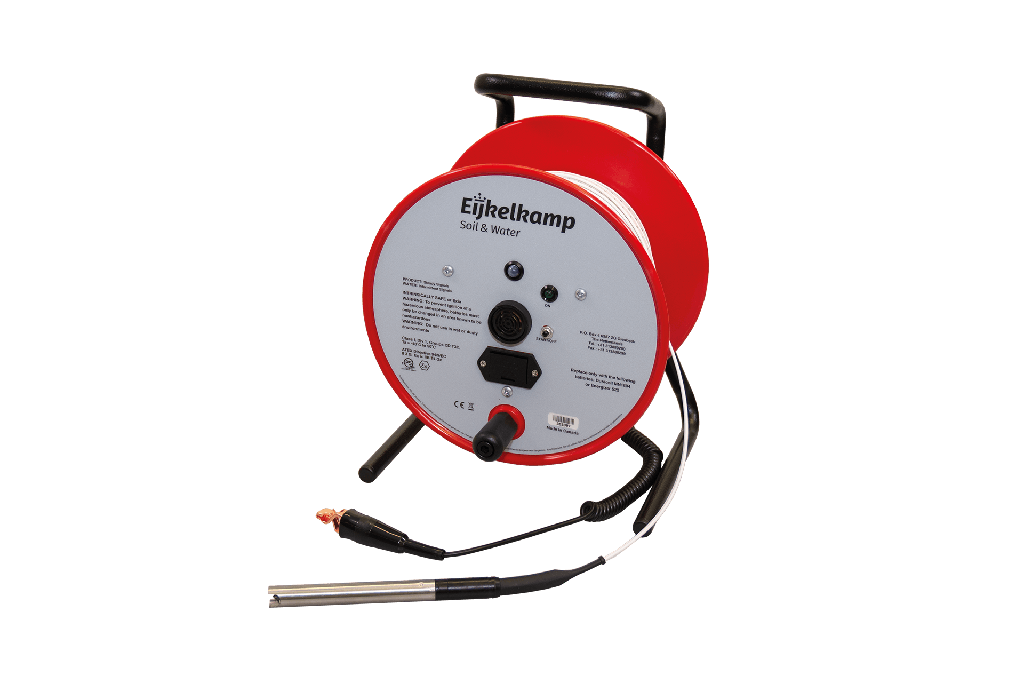
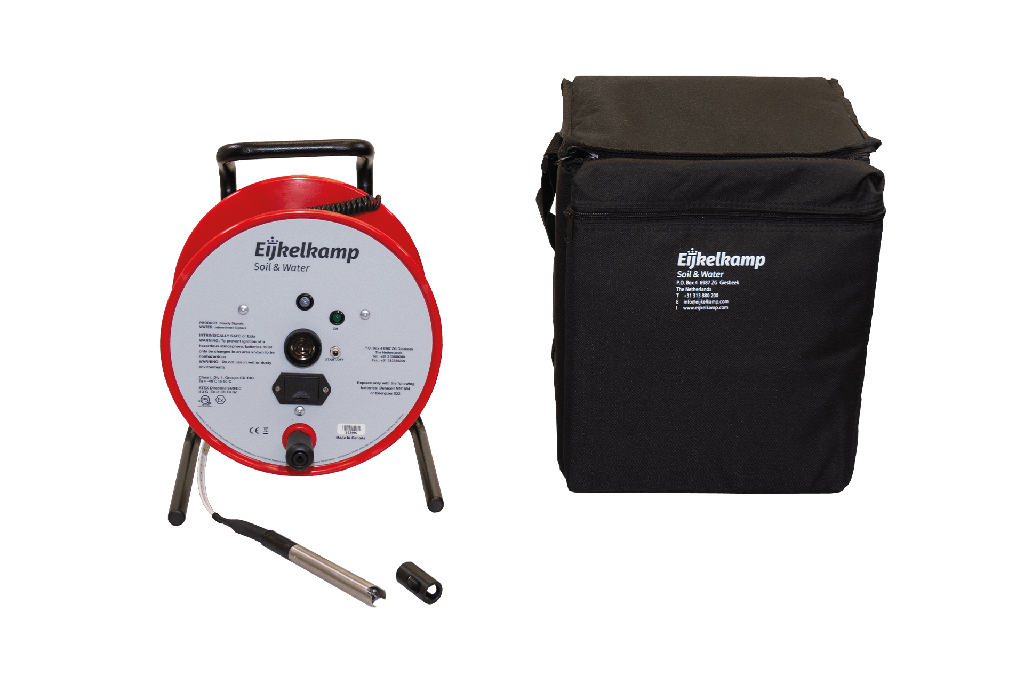
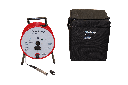


Floating layer thickness meter, 30 m
Floating layer thickness meter for the detection of floating and bottom layers of hydrocarbons. With sound and light signal. Electrode diameter 16 mm, tape measure 30 m with mm division.
Including carrying case. ATEX approved, for class 1 groups C and D environment up to 50 °C.
SKU :
110807Original :
110807With the Interface meter you can quickly and easily determine light (floating) non-aqueous phase liquids (LNAPL) and dense (sinking) non-aqueous phase liquids (DNAPL) to a depth of 30 metres. The interface meter is CSA certified for class one groups C and D locations up to 50 °C. The interface meter is very accurate, reliable and robust, making it ideal for use in the field.
If the liquid is a non-conductive oil/product the light and tone signals are continuous. And if the liquid is water (conductive liquid > 50 μS/cm), the tone and light signals are intermittent. Both sensors use the same zero point, which gives an accuracy as good as 1.0 millimetre (or 1/200 foot). The high accuracy enables the sensors to detect the slightest sheen of oil on the surface of the water.
Method
To measure the thickness of a floating layer, lower the probe into the well until the signals activate. If there is an oil/product layer on the top of the water (LNAPL), the light and tone will be steady. Read the depth of the permanently marked tape. Next lower the probe further into the water, where the signals become intermittent, then take a reading at the product/water interface. The thickness of the product layer is then determined by subtracting the first reading from the second.
In case there is a sinking layer (DNAPL) the intermittent signal will be first, followed by a continuous signal.